
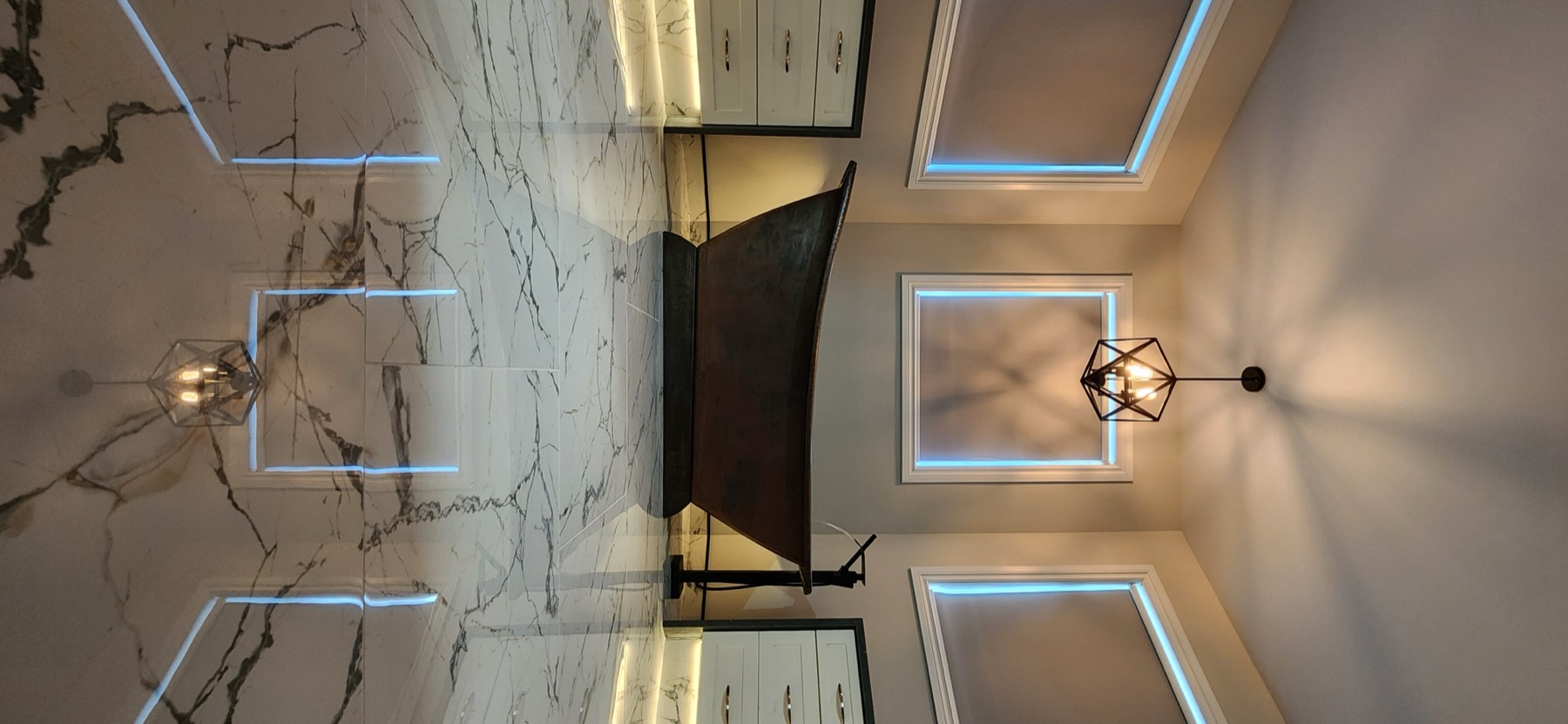
Copper Elegance: turning a problem bathroom into a long-term investment
What the award-winning Copper Elegance rebuild shows about curbless showers, large-format tile, waterproofing and planning around existing custom glass.
Copper Elegance started as an approved insurance claim for water damage in a bathroom that already looked high-end. The visible finishes were only part of the story. Once the room was opened up, the rebuild became about correcting the assembly underneath and planning every finished dimension before new tile went in.
Rebuilding around the glass
One of the most demanding details was the shower opening. The existing construction did not provide the tile substrate the new assembly needed, so that area was reframed and rebuilt.
At the same time, the existing custom glass enclosure was being reused. That meant the framing, waterproofing, mortar and tile all had to land at the planned final dimensions. Small errors early in the build would show up later when the glass went back in.
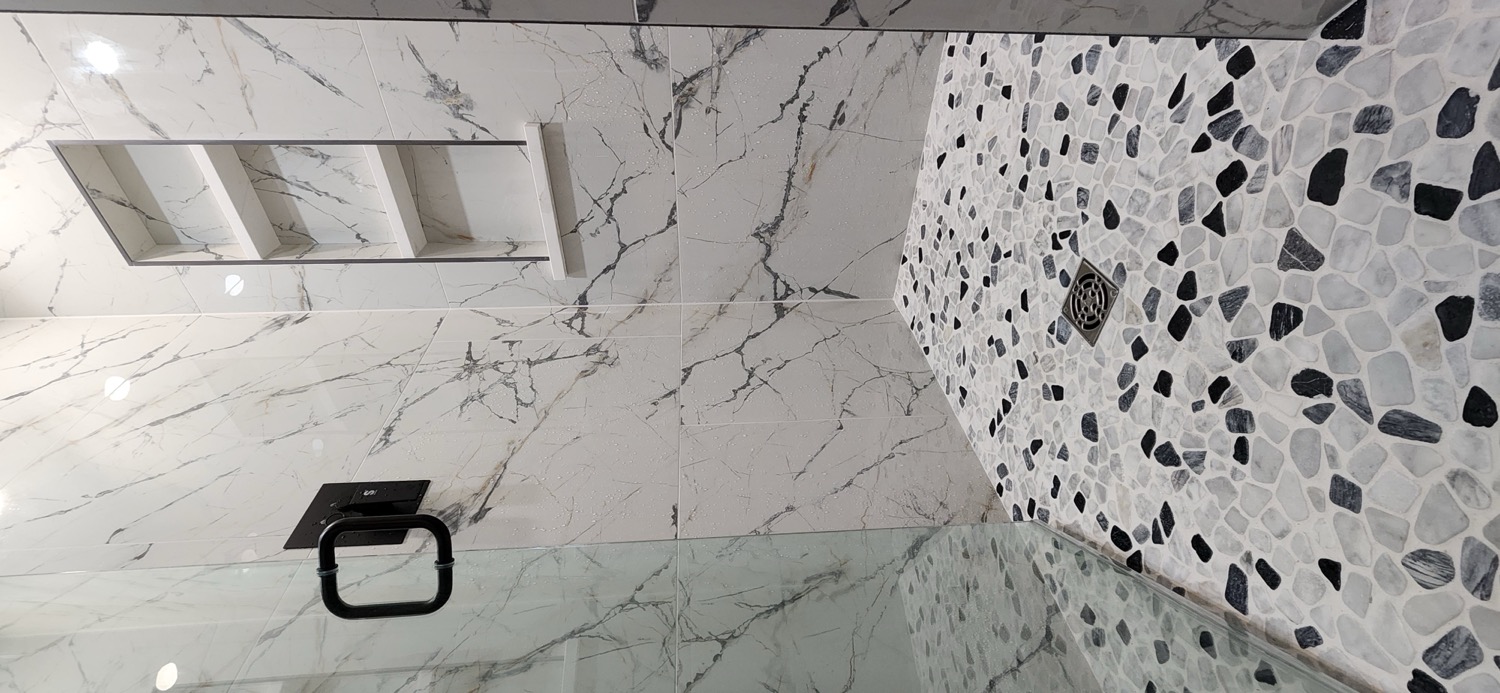
Copper Elegance: the finished enclosure shows the meeting of glass, large-format walls and mosaic floor. Reusing the glass made the final opening dimensions an early planning constraint.
Select the photo for a closer look.Large-format tile starts underneath the tile
The bathroom floor was prepared to be flat and stable before the 24 x 48 in. polished tile was installed. With tile that size, small irregularities in the substrate can affect edge alignment and mortar contact across a large surface.
The finished floor is visually simple because the preparation was handled before setting began.
A curbless shower needs a continuous waterproofing plan
The shower was converted to a curbless design, which removed the step at the entry but increased the need for precise floor geometry and water management.
Rather than treating the shower doorway as the end of the waterproof area, the waterproofing was extended into the surrounding bathroom floor. Real bathrooms see wet feet, splashing and water outside the glass, so the assembly was planned as a connected system rather than an isolated shower pan.
Heat, movement and long-term performance
In-floor heat was integrated into the bathroom. Heated tile assemblies move as temperatures change, so movement accommodation was part of the installation rather than an afterthought.
The goal was not simply a warm floor. It was to combine comfort with an assembly that could respond to normal expansion and contraction without transferring unnecessary stress into the tile.
The part everyone notices
The handcrafted copper bathtub and matching vessel sinks give the room its identity. Copper develops patina as it ages, so the material will continue to change over time instead of remaining visually static.
That contrast is part of what makes the project work: highly visible handcrafted copper in front of a tile assembly whose most important details are largely hidden.
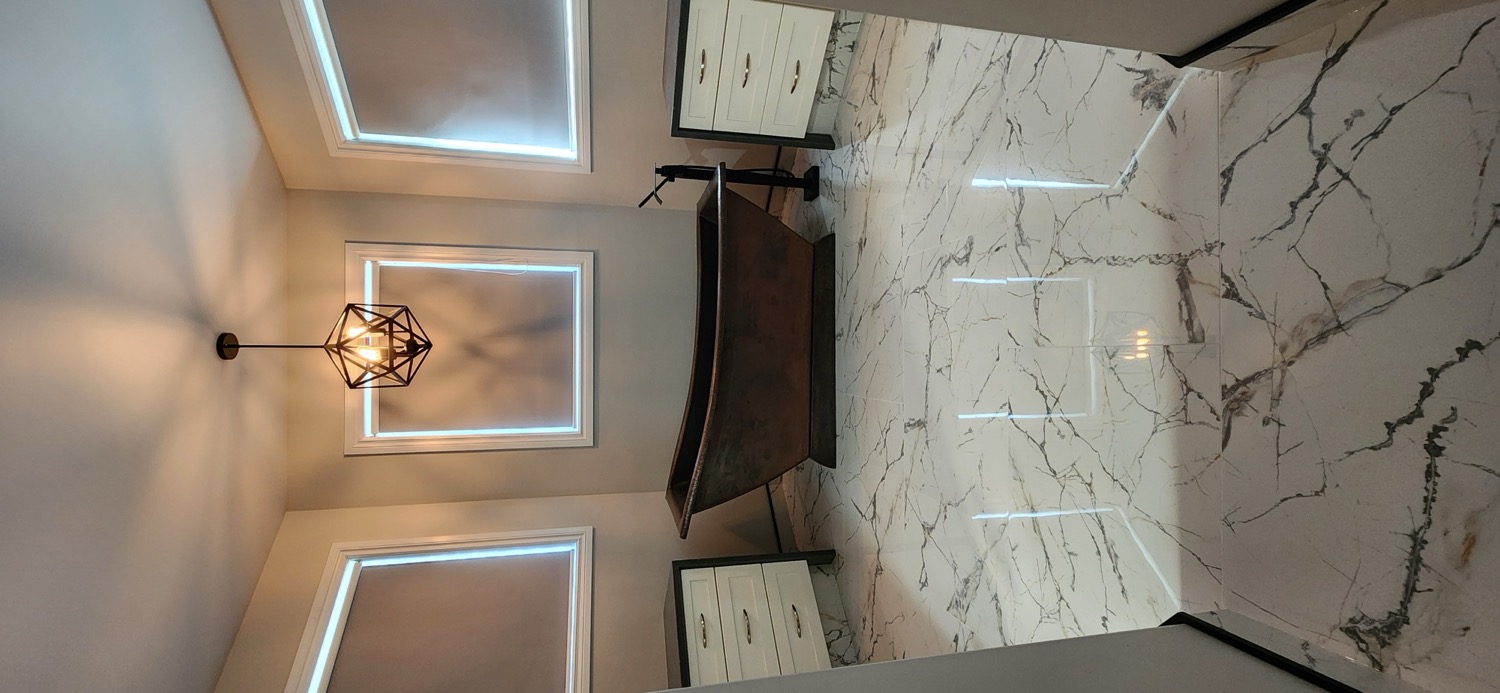
Copper Elegance: the polished floor and copper tub are the finished result. The preparation and water-management work described above sit beneath that appearance.
Select the photo for a closer look.The takeaway
Tile is a finish material, not the waterproofing system. A beautiful surface only performs as well as the preparation, waterproofing, movement planning and installation underneath it.
Copper Elegance received the 2026 TTMAC Hardsurface Awards Residential Award.