
What actually waterproofs a tiled shower?
Tile is the finish, not the whole waterproofing system. See how drains, seams, corners and floor transitions fit together in WNA shower projects.
The visible tile is only one part of a shower. The important question is not simply whether a tile resists water—it is how the complete assembly manages water at the drain, joints, corners and every opening through the surface.
Schluter’s shower-system guidance explains why tile and grout must work with a dedicated waterproofing system. A beautiful finish cannot take the place of those concealed details.
Think in connections, not individual products
A membrane on a wall is only part of the story. Its connections to the shower floor, drain, adjacent surfaces, niches and penetrations need to form the intended assembly. The requirements depend on the selected system; details from different construction methods are not automatically interchangeable.
For homeowners, a useful question is: “Which waterproofing system are you installing, and how will its edges and openings be handled?” That asks about the work beneath the finish without expecting you to become an installer.
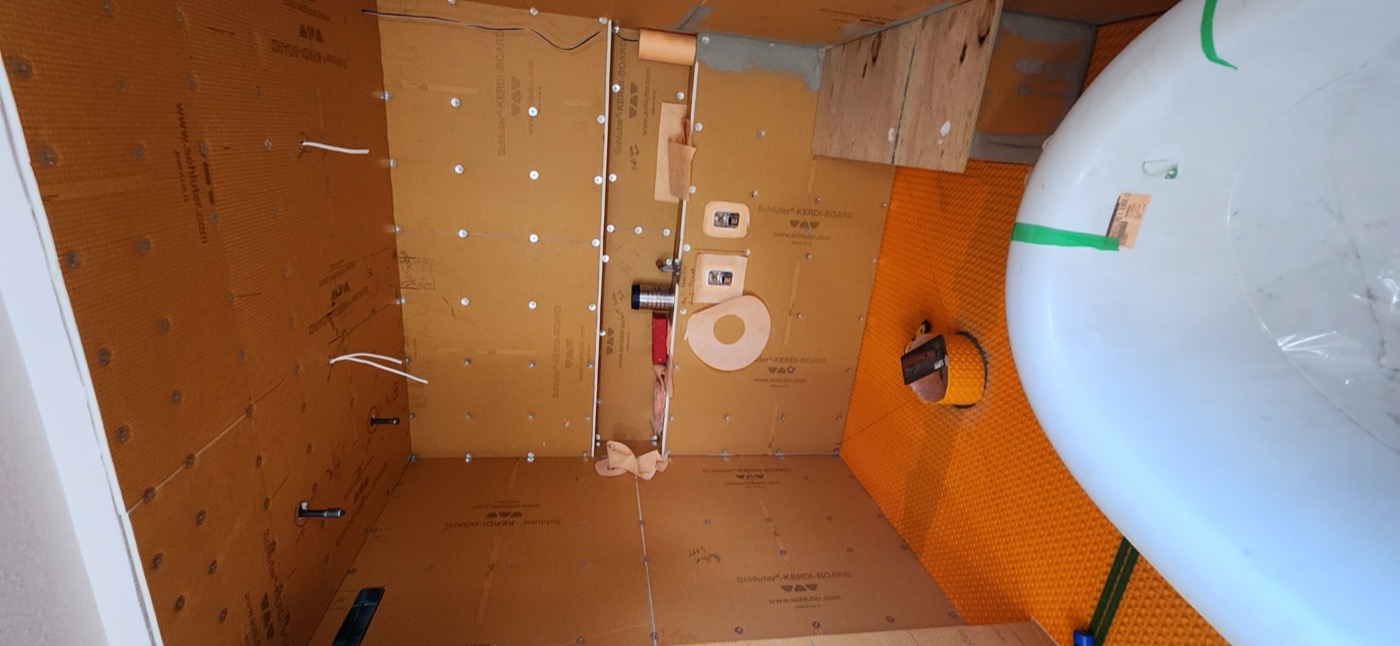
Luminous Smoke during wall preparation. This in-progress photograph shows the niche, fasteners and pipe openings that must be considered when completing the waterproofing system; it is not a record of a completed water test.
Select the photo for a closer look.Water does not stop at the shower doorway
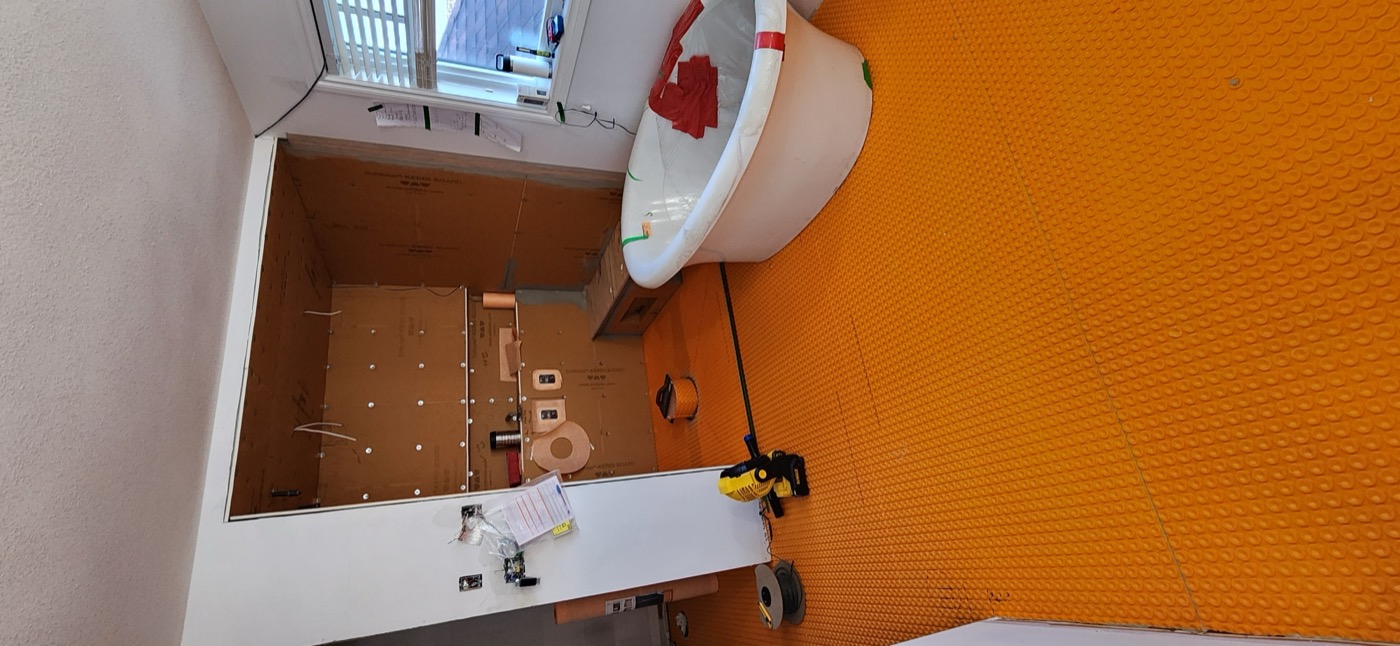
In Luminous Smoke, WNA extended the floor-waterproofing strategy through the ensuite. The DITRA-HEAT membrane seams, floor-to-wall transitions, corners and floor penetrations were waterproofed rather than leaving protection at the shower-pan boundary. The large freestanding tub was an important reason to plan for water outside the shower itself.
Schluter describes how sealing DITRA-HEAT seams and floor/wall connections can protect moisture-sensitive floor assemblies. It also specifies additional KERDI coverage when DITRA-HEAT is installed inside a shower; the bathroom-floor and shower details must be distinguished. See the manufacturer’s waterproofing guidance.
Whole-floor waterproofing is added protection, not a promise that any quantity of water will stay in the room. Doorways, drainage and other boundaries still matter, and spills should be dealt with promptly.
Ask about checks before the tile covers the work
A sensible project discussion includes how the installation will be checked and which water-testing requirements apply to the selected system and local project. Photographs of the preparation are useful records, but they do not by themselves establish a successful water test or prove every concealed connection.
Our behind-the-build case study shows the sequence from the original room to waterproofing, heat, tile and finishing. That sequence is the point: the finished surface comes after the water-management decisions, not instead of them.